
You've set the goal before. You wrote it down, felt ready, and started strong. Then work got busy, your energy dipped, and nobody knew when you quietly stopped.
That doesn't mean you lack discipline. You probably need more structure around the goal : and someone who helps you keep it visible. That's where an accountability partner comes in.
What is an accountability partner?
An accountability partner is someone who helps you follow through on a goal by checking in, asking direct questions, and encouraging your next step.
They don't need to become your coach, manager, therapist, or personal cheerleader. Their job stays simpler: help you do what you said you'd do and notice what keeps getting in the way.
A strong accountability partnership usually includes:
- A clear goal or small set of commitments
- Regular check-ins
- Honest progress updates
- Questions about obstacles
- A specific next step before the next conversation
The relationship can work in two directions. You might each pursue your own goals and hold each other accountable, or one person might support the other through a specific project.
Your partner doesn't need expert knowledge about your goal. If you're training for a race, they don't need to run. If you're building a business, they don't need to work in your industry. They need reliability, honesty, and enough care to pay attention.
Why accountability helps you follow through
Private intentions often disappear into a busy week. A shared commitment creates a small moment of social pressure. You know someone will ask what happened, so the goal stays closer to the front of your mind.
That pressure works best when it feels supportive rather than threatening. You shouldn't fear your partner. You should trust them to tell you the truth without turning one missed task into a character judgment.
A partner also helps you separate a real obstacle from a vague excuse. “I didn't have time” might actually mean the task felt too large, the next step lacked clarity, or you chose easier work first.
The conversation turns that discovery into a useful adjustment.
Our previous guide, Why Accountability Partners Actually Work (And How to Find Your Perfect Match), explores the social side of accountability in more depth. This guide focuses on the practical system you can use once you find the right person.
What does an accountability partnership look like?
Most partnerships follow a straightforward rhythm:
- You choose a meaningful goal.
- You define the actions that move it forward.
- You agree on when and how you'll check in.
- You share what happened.
- You adjust the plan and choose your next commitment.
For example, imagine you want to finish a professional certification. “Study more” won't give your partner much to work with. “Complete two practice modules before Sunday” creates a clear commitment.
At the check-in, your partner can ask:
- What did you commit to?
- What did you complete?
- What got in the way?
- What will you do before we talk again?
- What support would help?
That structure keeps the conversation focused. You don't need an hour-long meeting or a perfect explanation. Ten to fifteen honest minutes can protect a whole week of progress.
You can meet by phone, video, text, or inside a shared platform. Choose the format that makes showing up easy enough to repeat.
What makes a good accountability partner?
The right partner doesn't simply agree with everything you say. They help you stay connected to the standard you chose.
Look for someone who brings these qualities:
Reliability
They respond, attend check-ins, and respect the agreement. A brilliant conversation won't help if the person disappears every other week.
Honesty without harshness
They can ask, “What happened?” without making you feel small. They tell you the truth because they respect your goal, not because they want to win an argument.
Similar seriousness
Your partner doesn't need the same goal. They do need to care about making progress. Someone who treats every commitment casually may weaken the partnership.
Curiosity
A good partner looks for patterns. If you miss the same task three weeks in a row, they won't only say, “Try harder.” They'll help you ask what needs to change.
Compatible communication
You need a workable schedule and a communication style that fits both people. A daily text partnership won't suit someone who prefers one focused weekly conversation.
Your best friend might become a great partner. They might also give you too much reassurance when you need a direct question. Choose the person who helps you stay honest, not simply the person you already know best.
How do you find an accountability partner?
Start with people who already understand your effort. Consider a friend building a similar habit, a colleague working toward a professional milestone, or someone you meet through a community centered on your interest.
You can also find an Accountability Partner through Dorpamine. Dorpamine connects your goals, check-ins, and Progress Journal so your partner can respond to real progress instead of guessing how things are going.
If you want broader support, join a Public Dorp. Public Dorps bring together people working toward shared goals or interests, so it's easier to meet people who already care about the same kind of progress.
For a smaller and more private arrangement, create a Private or Family Mode space. Invite trusted friends, family members, or teammates into a more personal space where accountability stays focused and visible.
When you invite someone, make the request specific:
“I’m working on finishing my certification. Would you try a four-week accountability partnership with me? We’d check in for 15 minutes every Monday, review what we planned, and choose the next step.”
A clear invitation helps the other person understand the commitment. It also gives both of you permission to test the relationship instead of treating it like a permanent contract.
Build a check-in system you can keep
Good intentions won't create consistency on their own. Put the partnership on a simple schedule.
Start with one primary goal and agree on four details:
- Check-in day and time
- Communication method
- Length of each check-in
- What happens after a missed check-in
Weekly check-ins work well for many goals. Daily messages can help with a habit that needs frequent attention, but keep them short. A simple “planned, done, blocked” format often gives you enough visibility.
Use this weekly agenda:
1. Review the last commitment
Read the exact action you chose during the previous check-in. Avoid rewriting it to sound better after the fact.
2. Report what happened
Say what you completed, what you missed, and what changed. Your partner needs the real version, not a polished progress report.
3. Name the obstacle
Identify the practical or emotional barrier. Did you lack time, clarity, energy, confidence, or support?
4. Choose the next action
Pick one concrete step with a deadline. “Work on my portfolio” becomes “Draft the introduction by Thursday at 6 p.m.”
5. Record the commitment
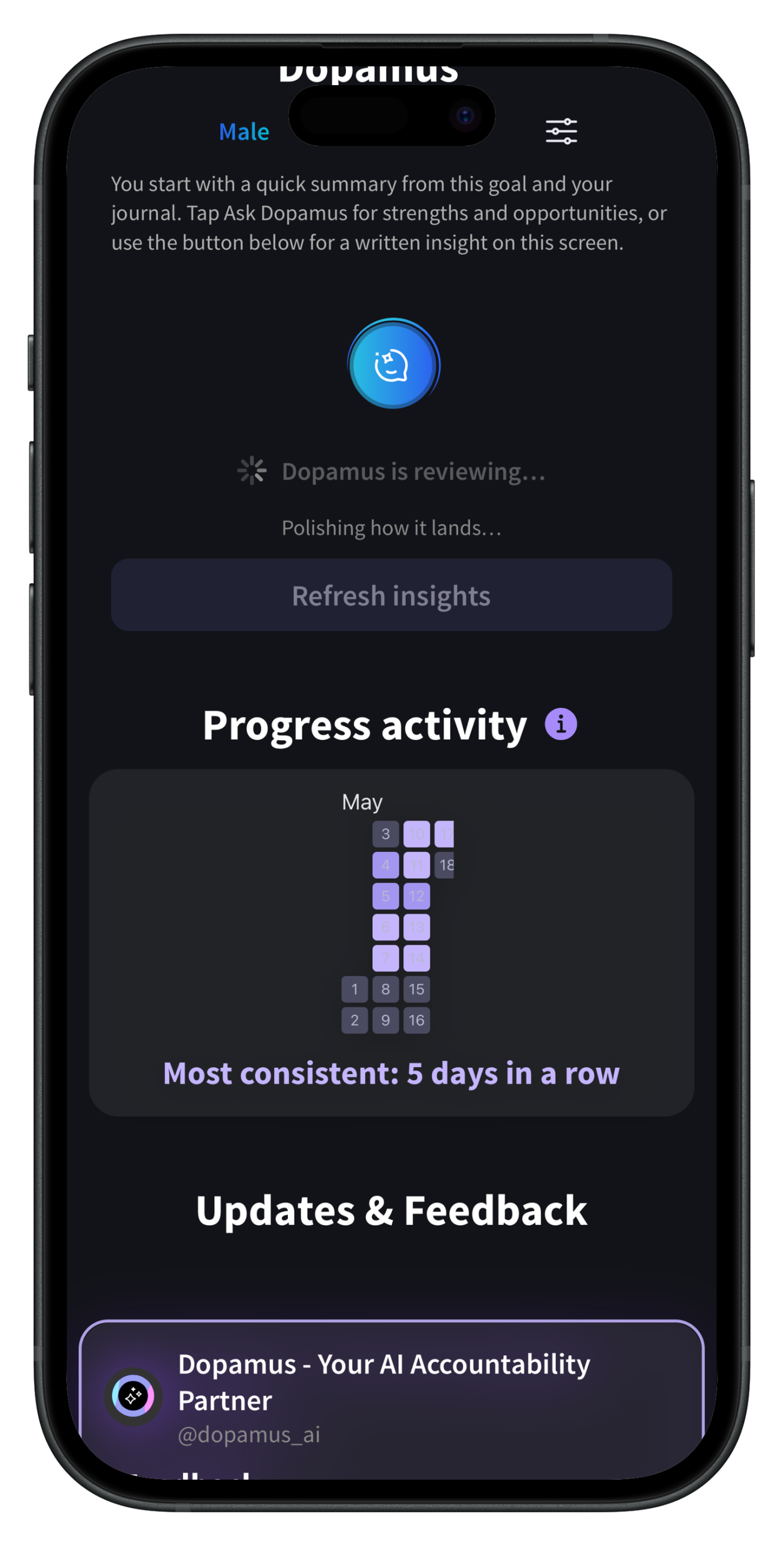
Write it down in a shared note, calendar, or Progress Journal. A written record helps you see patterns and notice progress that memory often misses.
Dorpamine keeps your goals, updates, and accountability conversations connected. It caps active goals at three, on purpose. That limit helps you protect your attention and give meaningful goals the support they actually need.
What should happen when you miss a commitment?
Missing a commitment doesn't make the partnership useless. Hiding the miss does.
Your partner should help you examine the plan without turning the conversation into shame. Maybe the action asked too much of your current schedule. Maybe you picked a task that felt productive but avoided the real challenge. Maybe your goal no longer fits what you want.
Use the miss as information. Then choose one of three responses:
- Keep the commitment and change the schedule
- Reduce the commitment to a realistic next step
- Replace the goal because your priorities changed
Agree on this approach before problems appear. You might also decide that two unexplained missed check-ins end the arrangement. A clear exit protects both people and keeps the standard respectful.
Progress doesn't require perfect follow-through. It requires honest feedback quickly enough to help you make the next decision.
Human accountability, community, or Dopamus?
A human partner brings context, care, and lived experience. They may understand your personality, notice a change in your tone, or ask a question that reaches beyond the task.
A Public Dorp, Private or Family Mode space, or Mastermind Dorp adds more voices and shared momentum. You gain a place to learn from people facing similar challenges while keeping your own goal structure visible.
Dopamus gives you another option when you want immediate, focused support. Dopamus helps you reflect on your progress, stay honest about what's happening, and reconnect with your next step inside Dorpamine. You can learn more about Dopamus through Dorpamine.
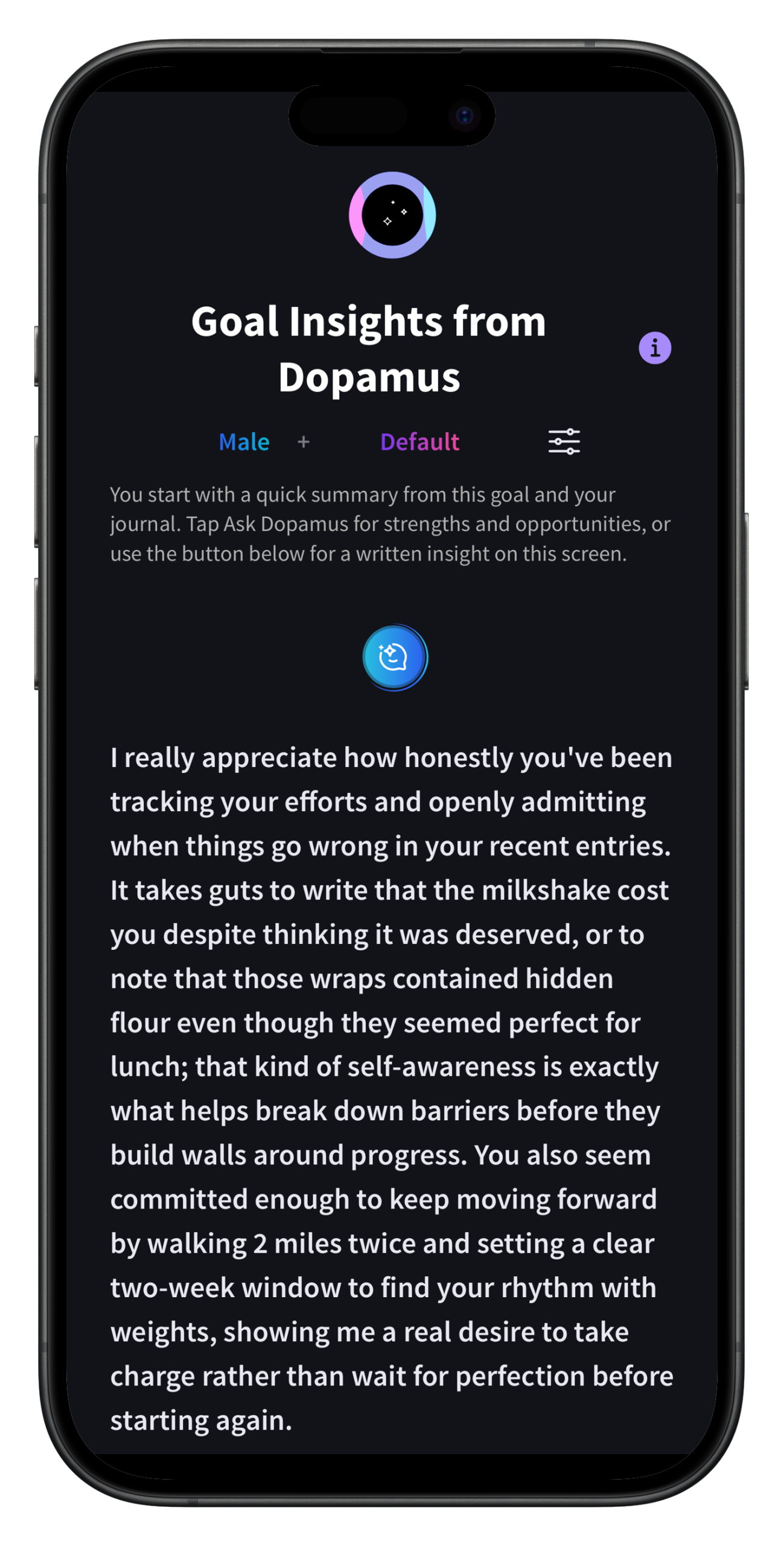
These options don't need to compete. You might use a human partner for a weekly conversation, a Mastermind Dorp for deeper accountability, and Dopamus for a quick check-in when motivation fades.
The simplest way to start this week
Choose one goal that matters now. Define one action you can complete within seven days, then ask one reliable person to check in with you.
Don't wait until you create the perfect system. Send the invitation, choose the first check-in, and write down the commitment. Accountability becomes useful when another person can see the promise and you can see the next step.
An accountability partner won't do the work for you. They will help you stop carrying the work alone, spot the patterns that slow you down, and return to the goal with more honesty. If you want one person, a focused community, or Dopamus alongside your progress, Dorpamine gives you a more structured way to follow through. Explore Accountability Partners, Dorps, and your Progress Journal at dorpamine.com.